

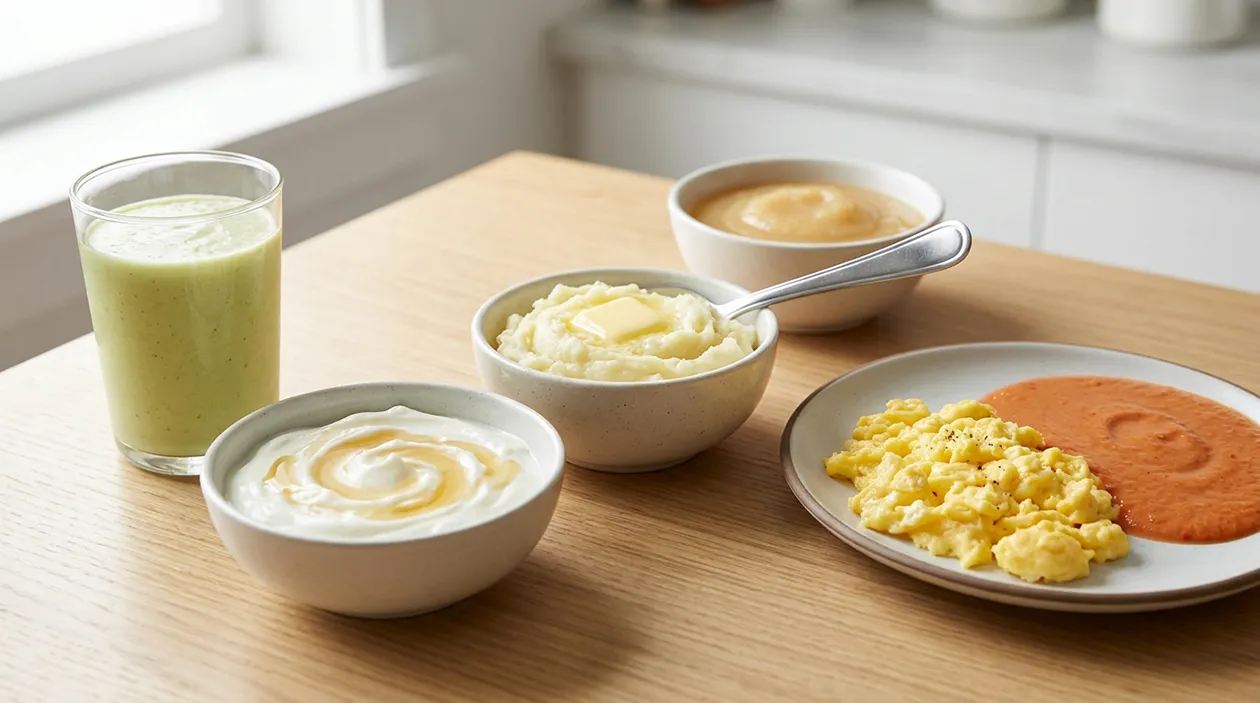
After wisdom teeth removal, stick to liquids and smooth, blended foods for the first 24 to 48 hours. From days three to seven, move on to soft, easy-to-swallow foods such as mashed potato, scrambled eggs and yoghurt. Avoid straws, spitting and crunchy foods for at least a week to help lower your risk of dry socket.
The good news is that you will be back to your usual meals before long. The first week simply asks for a little patience. Choosing the right foods at the right time keeps the area comfortable and protects the blood clot that does so much of the quiet work of healing behind the scenes.
The 7-day wisdom teeth diet: exactly what to eat and when
Healing happens in stages, so your diet should follow the same rhythm. Here is a simple day-by-day guide you can keep on the fridge.
| Days | Stage | What to eat | Keep in mind |
|---|---|---|---|
| Days 1–2 | Liquids & smooth foods | Protein shakes and smoothies (spoon or sip, no straw), apple puree, smooth soups, yoghurt and ice cream | Keep everything cool or lukewarm — never hot |
| Days 3–4 | Soft, minimal chewing | Scrambled eggs, mashed potato, well-cooked pasta, flaky soft fish | Chew on the side away from the extraction sites if you can |
| Days 5–7 | Easing back | Macaroni cheese, soft bread, finely shredded meats | Stop and rest the area if anything feels sharp |
A cold treat like ice cream on day one is not only allowed, it can feel genuinely soothing and may help settle swelling. The main rule for the first day or two is simply to keep food cool and soft, and to let everything else wait.
Stock up before your surgery
It is far easier to rest at home when the right foods are already in the cupboard. Before your appointment, add these five items to your shopping list:
- Apple juice
- Protein shakes or drinking yoghurt
- Greek yoghurt
- Instant mashed potato
- Eggs
Common mistakes to avoid
- Eating hot food on day one. Heat can disturb the blood clot that is forming over the socket.
- Foods with small seeds or grains such as rice, sesame seeds or berries. These can lodge in the extraction site and are hard to clear.
- Drinking through a straw. The suction can pull the clot loose, which is exactly what you are trying to avoid.
On track? If you can manage soft pasta on day four without throbbing pain, healing is usually progressing nicely.
How to reduce your risk of dry socket
Dry socket happens when the protective blood clot over the extraction site is dislodged before the area has healed. It can be quite painful, but it is largely avoidable. The aim is simple: keep suction and pressure out of your mouth while the clot settles.
Stick to this short protocol in the first week:
- No straws for at least seven days.
- Rinse gently, never forcefully. Instead of swishing or spitting, take a mouthful of warm salt water, tilt your head gently from side to side, and let it fall out into the sink on its own.
- Sip, don’t gulp. Staying hydrated supports healing, so drink plenty of water in small, gentle sips.
- Avoid smoking and vaping. Both the suction and the chemicals involved are well known to slow healing and raise the risk of dry socket.
Dry socket or normal healing?
Some discomfort is expected after any extraction. The pattern to watch for is different: pain that eases over the first couple of days and then suddenly returns as a sharp, throbbing ache around day three or four, often spreading towards your ear. If that happens, give us a call so we can take a look. Reaching day five with no sharp, radiating pain usually means you are past the riskiest window.
The pain timeline: why days three and four are often the worst
If your discomfort feels worse a few days in rather than straight after surgery, you are not imagining it. Many people find day three is the most uncomfortable. By then the local anaesthetic has fully worn off, and the body’s natural inflammatory response — the swelling — tends to peak around 48 to 72 hours after the procedure. This is a normal part of healing.
What is the “3-3-3 rule”?
You may have seen the “3-3-3 rule” mentioned online. It is a shorthand for staggering two everyday pain relievers — paracetamol and ibuprofen — so that one is always working while the other is between doses. Spacing them out like this often keeps discomfort steadier than relying on a single medicine.
The important part is to follow the dosing instructions printed on the packet and any specific guidance your dentist gives you, and never to exceed the recommended dose. If you take other medications, or have a health condition such as a stomach, kidney or liver issue, check with your pharmacist or GP before combining pain relievers. Setting a reminder on your phone for each dose can help you stay ahead of the discomfort rather than catching up once it has built.
Day four may still feel a little swollen, but sharp pain should be easing into a duller ache, and most people notice a clear improvement by day five.
Fast food and cravings: when can I eat pizza or a burger?
By the end of the week the cravings usually kick in. As a quick guide: pizza is a no on day three, and a burger on day seven is fine only if you take small bites and chew with your front teeth. Before you give in, run through these three questions:
- Is it crunchy, crisp or chewy, like pizza crust? Wait until at least day 10.
- Does it make you open wide, like a stacked burger? If your jaw is still stiff, cut it into small pieces.
- Does it have small seeds, like a sesame bun? Skip it — seeds can get caught in the socket.
Still craving something? Try these gentler swaps instead:
| Craving | Soft swap to try |
|---|---|
| A burger | A soft meatball with mashed potato |
| Pizza | Cheesy soft pasta with tomato sauce |
| Something crunchy | Hold off until at least day 10, then ease back in slowly |
When to contact the practice
Most recoveries are smooth and uneventful. Still, it is worth getting in touch with us if you notice bleeding that will not settle, swelling that keeps getting worse after day three, a fever, or pain that your usual pain relief is not touching. A quick phone call is always better than waiting and wondering.
We look after families across the Hawkesbury — from Kurmond and North Richmond through to Richmond, Windsor, Kurrajong and beyond — and we are glad to help you through every stage of recovery. If you have a question about your healing, or you would like to read more about the procedure itself, see our wisdom teeth removal page or call us on (02) 4504 1988.
Frequently asked questions
Can I eat ice cream after wisdom teeth removal?
Yes. Plain, soft ice cream is one of the better choices for the first day or two. It is cold, requires no chewing and can help soothe the area. Just eat it with a spoon rather than through a straw, and avoid varieties with nuts, lollies or hard pieces.
How long until I can eat normally again?
Most people return to a fairly normal diet within one to two weeks. You will move from liquids in the first 48 hours, to soft foods through the rest of the first week, then gradually reintroduce firmer foods as comfort allows. Crunchy and chewy foods are usually the last to come back, often after day 10.
Is day two or day three worse after wisdom teeth removal?
Day three is often the most uncomfortable, because swelling tends to peak around 48 to 72 hours after surgery and the anaesthetic has fully worn off. Things generally start to improve from day four or five.
Can I eat a burger seven days after wisdom teeth removal?
Often yes, with care. By day seven a soft burger is usually manageable if you take small bites and chew with your front teeth. Avoid sesame seed buns, and cut it into smaller pieces if your jaw still feels stiff.
This article is general information only and is not a substitute for personalised advice. Every recovery is different, so please follow the specific instructions provided by your dentist, and get in touch with us if you have any concerns.