— What are dental veneers?

One of the more conservative ways to change how a tooth looks.
Dental Veneers

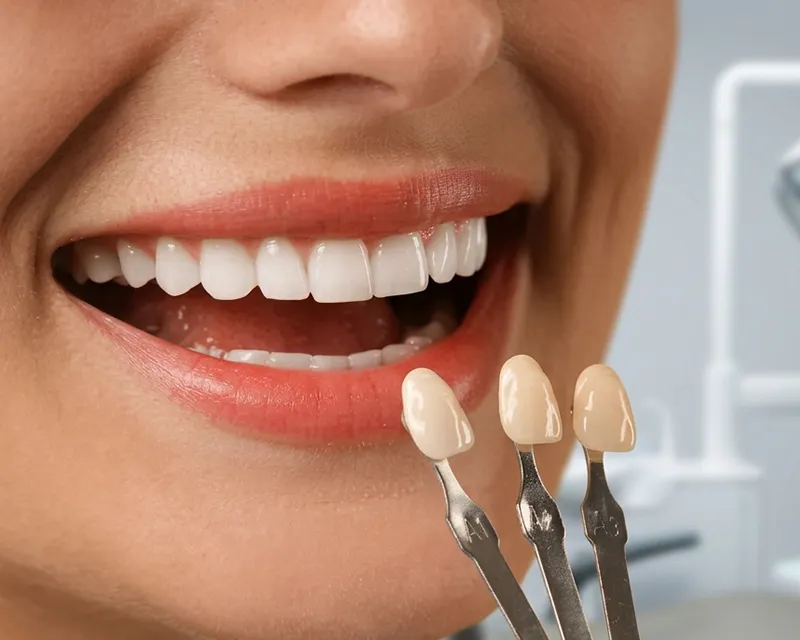
Dental veneers are thin, custom-made covers bonded to the front surface of a tooth to improve its colour, shape, size or alignment. Made from porcelain or composite resin, they’re well suited to teeth that are stained, chipped, worn, slightly crooked or unevenly spaced.

A veneer doesn’t replace a tooth, it sits over the visible front of it. That makes veneers ideal for the front teeth that show when you smile, rather than the back teeth that do the heavy work of chewing.

We provide both porcelain and composite veneers in-house, so the conversation starts with what suits your teeth and your goals, not with what we happen to offer. Whether it’s a single veneer for a chipped front tooth or several to even out colour and shape, we talk you through every option before anything is decided.

— Porcelain & composite compared

Same job, made differently, and suited to different situations.

Both cover and improve the look of a tooth, but they’re made, fitted and priced differently. Here’s how they compare, in plain terms.

Composite veneers

Built up directly on the tooth using a tooth-coloured resin, the same family of material as white fillings. Applied in the chair with little or no removal of the underlying tooth, and adjusted or repaired relatively easily. The trade-off is durability: composite is strong but softer than porcelain, and can pick up staining over time from coffee, tea, red wine and smoking. Durability, around 5 to 7 years.

Porcelain veneers

Thin shells custom-made in a dental laboratory to fit your teeth, then bonded into place over two visits. A small amount of enamel is generally removed so the veneer sits flush. Porcelain is harder, more stain-resistant and more lifelike than composite, but it costs more, and the tooth preparation is not reversible, which is exactly why we talk it through carefully first. Durability, around 10 to 15 years.

— What veneers can help with

You might recognise your own situation here.

Veneers aren’t right for every situation. Heavily decayed teeth, significant bite problems or gum disease usually need to be addressed first, and some cases are better suited to crowns, whitening or orthodontics. Part of our job is to tell you honestly when a veneer is the right tool, and when it isn’t.

01

Discoloured teeth that don’t respond well to whitening, or are stained from the inside

02

Chipped, worn or uneven edges on front teeth

03

Small gaps between teeth that you’d like closed

04

Slightly crooked or irregularly shaped teeth, where full orthodontics may be more than you need

04

Older fillings or restorations on front teeth that no longer match

— What happens at your appointment

Knowing what’s involved takes the uncertainty out of the decision.

Most people find veneer treatment comfortable and straightforward. Here’s how it works at The Kurmond Dentist.

01

Consultation

We examine your teeth and gums, listen to what you’d like to change, and explain whether composite or porcelain suits your situation, or whether another treatment would serve you better.

02

Planning

If you go ahead, we plan the shape, shade and number of veneers with you. For porcelain, we take a scan or impression for the laboratory.

03

Treatment

Composite veneers are usually built up and finished in one appointment. Porcelain veneers are fitted at a second appointment once the lab has crafted them, carried out under local anaesthetic where needed.

04

Review

We check the fit, your bite and how everything feels, and book your routine reviews so your veneers stay in good shape.

— Frequently Asked Questions

Veneers, answered.

Can’t find what you’re looking for? Give our friendly team a call, we’re happy to help with any questions you may have.

Dental veneers are thin, custom-made covers bonded to the front of a tooth to improve its colour, shape, size or alignment. They can be made from porcelain or composite resin and are used mainly on the teeth that show when you smile.
Composite veneers are built up directly on the tooth in a single visit using tooth-coloured resin, and are more affordable but less durable. Porcelain veneers are crafted in a dental laboratory and bonded over two visits, they’re harder, more stain-resistant and longer-lasting, but cost more. The Kurmond Dentist provides both.
Porcelain veneers usually involve removing a small amount of enamel, which does not grow back, so that step is not reversible, though the veneers themselves can be replaced when they wear out. Composite veneers are more conservative and sometimes need little or no tooth preparation. We explain exactly what’s involved for your teeth before you decide.
Veneer treatment is carried out under local anaesthetic where needed, and most people find it comfortable. Some mild sensitivity afterwards is normal and usually settles within a few days.
Veneers are a cosmetic treatment, and the amount your fund contributes depends on your level of extras cover. As a HICAPS practice, we can process any eligible claim on the spot so you only pay the difference. Check your individual cover with your fund.

— Book an Appointment

We’d be glad to welcome you to the practice.

Whether you’re booking your first visit or simply have a question, our team is here to help, give us a call or send us a message, and we’ll find a time that suits you and your family.