
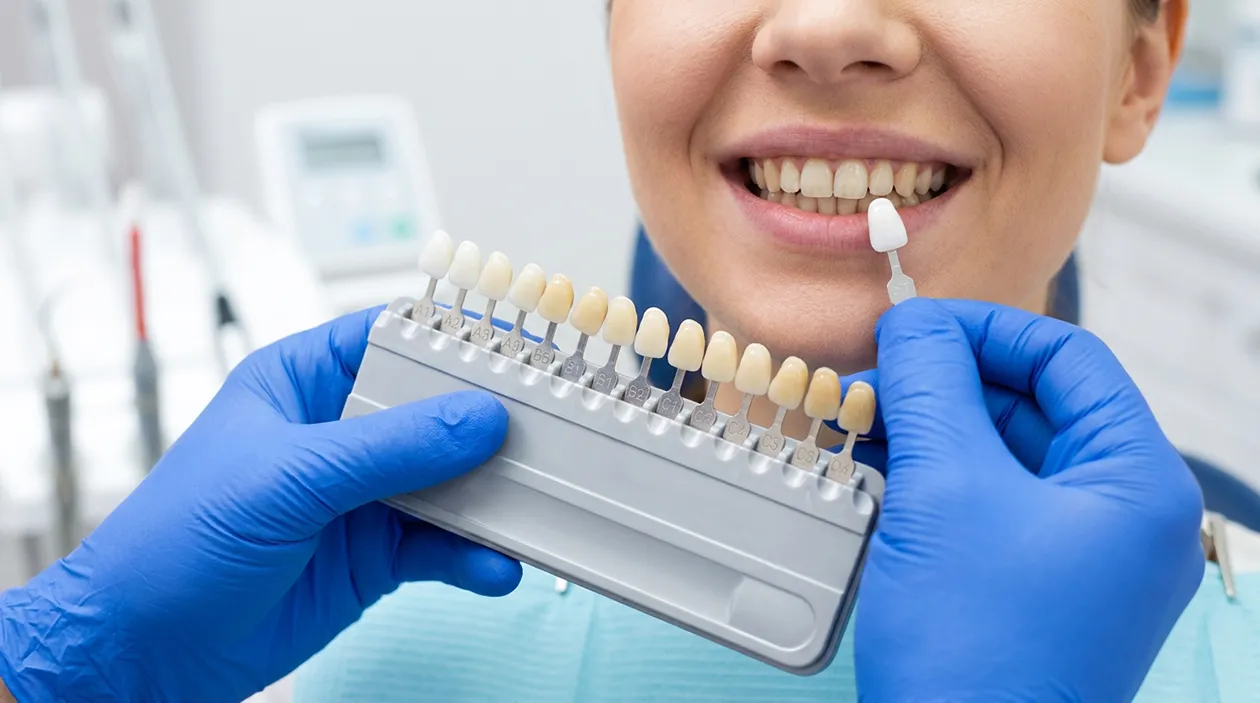
Teeth whitening generally lasts anywhere from around six months to three years, depending mostly on the method you choose and your everyday habits. Professional in-chair whitening tends to last one to three years, while over-the-counter strips and gels usually fade after about four to six months.
Below you will find a clear timeline for each whitening method, along with a simple maintenance routine to help your results last as long as possible.
How long will professionally whitened teeth last vs at-home kits?
Professional teeth whitening is the most durable option, often lasting up to three years thanks to its higher peroxide concentration. At-home kits work more gradually and usually need topping up every few months. The table below compares the main methods at a glance.
| Whitening method | How long it lasts | Relative cost | Best for |
|---|---|---|---|
| Professional in-chair (LED) | 1 to 3 years | $$$ | Immediate, longer-lasting results |
| Custom take-home trays | 1 to 2 years | $$ | Maintenance and gradual whitening |
| Over-the-counter strips | 4 to 6 months | $ | Quick touch-ups before an event |
| Whitening toothpaste | 2 to 4 weeks (surface only) | $ | Daily stain prevention |
Is it worth getting your teeth whitened?
The honest answer is that it depends on what is causing the discolouration. The simplest way to think about it is to ask where your stains have come from.
If your teeth have gradually darkened from coffee, tea, red wine, or smoking, whitening tends to give you good value, because those stains usually sit on the surface and respond well to treatment. If the discolouration is the result of an old injury or certain medications, the colour change is often deeper inside the tooth, and standard whitening may do very little. In that case, options such as veneers or bonding may be a better fit, and your dentist can talk you through them.
A quick rule of thumb: for a wedding, a milestone birthday, or a new job, custom take-home trays or in-chair whitening give the most reliable lift. For general upkeep between bigger treatments, a maintenance kit or whitening toothpaste is usually enough.
Can yellow teeth really be whitened? Assess your stains
Most yellowing can be improved, but not every type of stain responds the same way. Run through these three questions to get a sense of what you are dealing with.
- Are your teeth a fairly even yellow all over, or are there grey or brown patches?
- Do you drink dark liquids such as coffee, tea, or red wine most days?
- Did the yellowing build up slowly over time, or did it appear after a specific injury or medication?
Here is how to read your answers.
| Stain type | What it looks like | What to do |
|---|---|---|
| Extrinsic (surface) | Even yellow or brown tones from food, drink, and smoking | Tends to respond well to whitening |
| Intrinsic (internal) | Grey, blue, or single dark teeth from trauma or medication | May not respond to standard whitening. Ask your dentist about internal bleaching or bonding |
One common myth worth clearing up here: brushing harder will not whiten your teeth. Brushing twice a day helps stop new surface stains forming, but it does not lift existing colour. In fact, scrubbing too aggressively can wear away enamel over time, which exposes the naturally yellower dentine underneath and can leave teeth looking darker. A soft-bristled brush and a gentle technique protect your results.
Do teeth go back to normal after whitening? The anti-relapse routine
Yes, teeth will slowly drift back towards their natural shade as you keep eating and drinking pigmented foods. The good news is that you can delay this relapse considerably with a few consistent habits. The easiest framework to remember is the 2-2-2 rule.
The 2-2-2 maintenance rule
- Brush 2 times a day using a soft-bristled brush.
- Brush for 2 full minutes each time. A phone timer makes this easy.
- Visit your dentist 2 times a year for a professional clean and polish.
Try this now
- For the first 48 hours after whitening, stick to lighter foods such as chicken, rice, milk, and cauliflower while the enamel settles.
- Start drinking dark liquids through a reusable straw to keep them away from your front teeth.
- Rinse with water straight after a coffee or a glass of red wine.
A common mistake to avoid: reaching for an abrasive charcoal toothpaste in the hope of extending your whitening. Charcoal pastes can scratch the enamel surface, which actually makes teeth trap stains more easily over time. Stick to a gentle, low-abrasion paste instead.
A simple self-check: take a photo of your smile in the same bathroom lighting once a month. Tracking the same angle and light makes it easy to spot when the shade is starting to fade, so you can book a top-up before it becomes obvious.
Is there a downside to teeth whitening? Managing the risks
The main downsides of teeth whitening are temporary tooth sensitivity, often felt as short sharp twinges with hot or cold, and mild gum irritation from the bleaching agent. Both are common and usually settle on their own.
The reason for the sensitivity is straightforward. Peroxide briefly opens up the tiny tubules inside the tooth, which can make nerves more reactive for a short while. As those tubules close again, the sensitivity eases.
Key takeaway: sensitivity after whitening is almost always temporary and usually resolves within a day or two. Lasting enamel damage is uncommon and is generally linked to overusing products rather than to whitening itself.
If you do get sharp twinges, here is how to manage them.
| Problem | What helps |
|---|---|
| Sharp twinges or sensitivity after whitening | Pause whitening, and consider a sensitive toothpaste containing potassium nitrate, ideally started a couple of weeks before treatment. Your dentist can recommend an option suited to you. |
| Mild gum irritation | Usually settles within a day or two. Custom-fitted trays help by keeping the gel off the gums. |
Frequently asked questions
How long does teeth whitening last?
Teeth whitening usually lasts between six months and three years. Professional in-chair whitening generally lasts one to three years, custom take-home trays around one to two years, and over-the-counter strips about four to six months. How long your results last depends largely on your diet and daily maintenance.
Do teeth go back to their original colour after whitening?
Yes, teeth gradually return towards their natural shade over time as you eat and drink pigmented foods and beverages. You can slow this down considerably with good maintenance, such as limiting staining drinks, using a straw, and keeping up your regular professional cleans.
Does brushing twice a day whiten your teeth?
No. Brushing twice a day helps prevent new surface stains, but it does not actively whiten teeth. Brushing too hard can also wear down enamel over time, which exposes the yellower dentine underneath and can make teeth look darker.
Can yellow teeth be whitened?
Often, yes. Yellow stains from coffee, tea, red wine, and smoking usually sit on the surface of the enamel and tend to respond well to whitening. Grey or brown discolouration from injury or certain medications sits deeper inside the tooth and may need a different approach, such as internal bleaching or bonding.
Is there a downside to teeth whitening?
The most common downsides are temporary tooth sensitivity and mild gum irritation from the bleaching agent. These usually settle within a day or two. Lasting damage is uncommon and is generally linked to overusing products rather than to whitening itself.
Talk to us about whitening that lasts
The longest-lasting results usually come from a treatment matched to your teeth and your habits, rather than a one-size-fits-all kit. If you would like to know which option suits you, the team at The Kurmond Dentist is happy to take a look and walk you through it. You can read more on our teeth whitening page, or book in for a check-up and clean as part of your regular care.
This article is general information only and is not a substitute for personal dental advice. For guidance about your own teeth, please speak with your dentist.